


Non-Compete Demand Letter in Texas – What You Need to Know


Non-compete agreements are used to restrict employees from seeking employment at a competitor who could benefit from that employee’s unique knowledge. Protecting trade secrets or proprietary knowledge has to be balanced with the rights of workers. If you receive a non-compete demand letter in Texas, you might feel overwhelmed about how it could affect your current employment and whether you could face penalties.
Hire a Non-Compete Agreement Lawyer
If you have received a demand letter from a previous employer, it can be an incredibly stressful situation. You may be facing a list of demands with a short timeline of compliance and might feel you have few options but to oblige the demands. In this situation, you need to hire a non-compete agreement lawyer who can review the letter and offer advice on your next steps. At Alagood Cartwright Burke PC, our team can review your case and advocate for your rights.
Use of Non-Compete Agreements
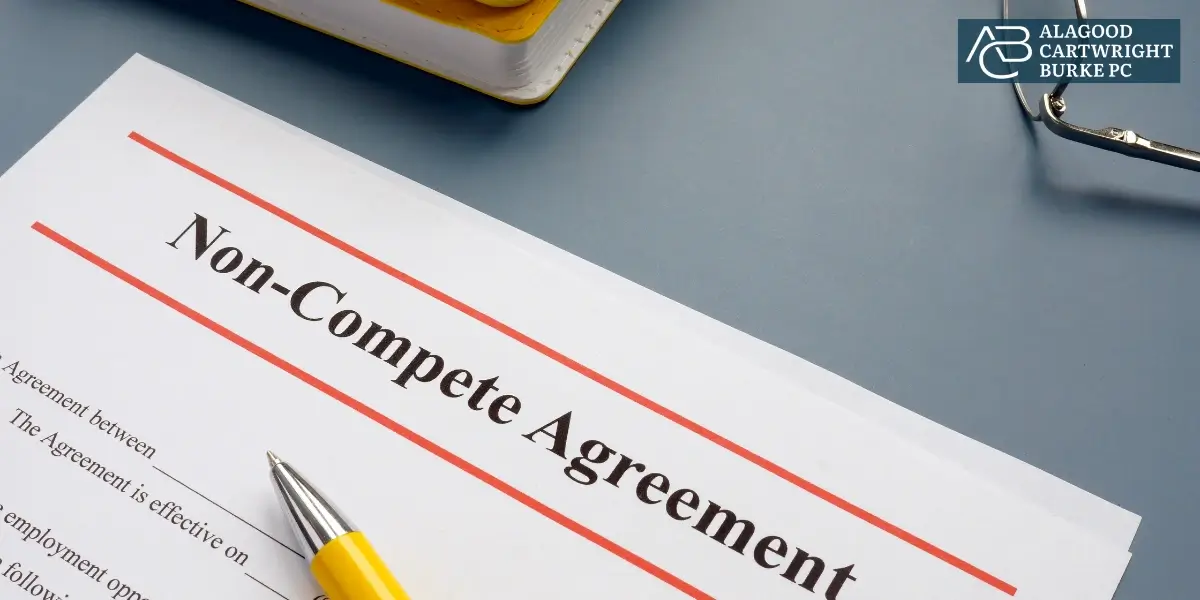
A non-compete agreement is a legally binding contract between an employee and their employer. This agreement outlines restrictions the employee has when seeking employment at a competitor or when starting their own business. In Texas, non-compete agreements have to meet specific criteria. Those criteria include:
- Part of an enforceable agreement
- Contains reasonable limitations
- Not place an unreasonable burden on the employee’s ability to make a living
- The employee must also benefit from the agreement
Nationwide, the use of non-compete agreements differs. Four states have a complete ban on non-compete agreements, while others have placed restrictions on the use of non-compete agreements. Nine states have no restrictions on the use of non-compete agreements.
The U.S. Government Accountability Office, in 2023, reviewed a nationally representative study of non-compete agreements and found that 18% of workers had signed such an agreement. Of the companies that used non-compete agreements, employees required to sign included:
- 69% of part-time workers
- 72% of hourly workers
- 92% of salaried non-managers
- 98% of salaried managers
- 98% of executives
Non-Compete Demand Letters
When an employer believes one of their former employees is in violation of an enforceable non-compete agreement, they may send a demand letter to the former employee and to their current employer. There is no standard form for a demand letter, but they should contain some specific information, such as:
- The facts of the claim. This could be any information relevant to the claim that the non-compete agreement was breached.
- Evidence to support the claim. Evidence may include a copy of the non-compete agreement or other documentation establishing the claim.
- A demand for a remedy to the claim. Your former employer may seek an injunction barring you from working at your new employer, monetary compensation for violating the agreement, or both.
- A deadline to respond. A set date should be included for you to send a written response.
- Consequences for failure to respond. Consequences are often the escalation of the matter to the court system.
Next Steps After Receiving a Demand Letter
When you receive a demand letter, it can feel overwhelming. You should review the letter carefully before taking any action. Don’t make any agreements until you have consulted with a Texas non-compete agreement attorney. The steps to respond to a demand letter are:
- Read the letter carefully. Make note of any important dates.
- Verify who sent the letter and ensure the claims are legitimate.
- Consult with your current employer.
- Gather any necessary documents or evidence that support your case.
- Review your legal rights and obligations.
- Respond professionally by the deadline.
- Offer negotiation or mediation as a remedy.
- Keep detailed records of any interactions related to the claim.
Don’t ignore a demand letter claiming you violated a non-compete agreement. Even if you feel that their claims have no merit, failure to respond could result in your previous employer filing a claim against you in court.

FAQs
Are Non-Competes Enforceable in Texas?
Yes, non-compete agreements are enforceable in Texas, but courts tend to disfavor non-compete agreements and review them on a case-by-case basis. The non-compete agreement cannot make it unreasonably difficult for the employee to earn a living.
For a non-compete agreement to be enforceable, there have to be specific limitations on the timeframe of the agreement, the geographical area of the agreement, and a reasonable scope of work included.
Can I Work for a Competitor if I Signed a Non-Compete in Texas?
If you have signed a non-compete agreement in Texas, you may be able to work for a competitor, but that depends on the specific requirements set in the non-compete agreement. If the employment does not violate the non-compete agreement, you can work for a competitor.
If your employment at a competitor violates any of the requirements of the non-compete agreement, you could face consequences. An experienced non-compete agreement attorney can review your agreement and advise whether your employment is allowed.
Am I Obligated to Sign My Employer’s Non-Compete Agreement in Texas?
If signing a non-compete agreement is a condition of employment, you are required to sign the agreement if you want to work for that company. However, you can have a non-compete agreement attorney review the agreement to see if it is enforceable.
You also have the right to negotiate the terms of the non-compete agreement. This can be beneficial if the current terms are unreasonable or to better define the scope of the agreement.
What Are the Consequences of Violating a Non-Compete Agreement?
The specific consequences for violating a non-compete agreement are outlined in the agreement, but there are some common consequences. You could face an injunction preventing you from working for a competitor. This could cause financial problems for your new employer.
Your professional reputation is likely to suffer, and you could be seen as unreliable or unprofessional. You may also suffer monetary damages as a penalty for breaking the non-compete agreement.
Contact Alagood Cartwright Burke PC
With over 100 years of combined experience, our attorneys work as a team to build a strong defense against non-compete agreement cases. Non-compete agreement cases can be complicated, but you have rights in Texas that dictate how a non-compete agreement can be enforced. Contact Alagood Cartwright Burke PC today to schedule your initial consultation.
Copyright © 2026 Alagood Cartwright Burke PC • All rights reserved.
*Images are obtained under license from Canva and other third-party stock image providers, with attribution included where required.
Digital Marketing By 